Source portable endolifting laser machine for Lipolysis, Liposuction, and Vascular
Find 30 portable endolifting laser machine options featuring diode laser technology for lipolysis, liposuction, and vascular treatments. Buyers can compare specifications including wavelengths, power output, and certifications from verified manufacturers.
Key considerations
Products List


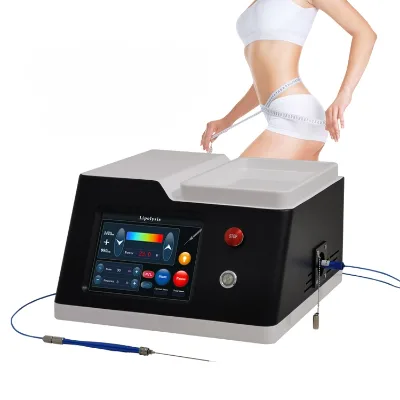


1470nm Endo Laser Machine Endolifting for Non Surgical Fat Reduction Beauty Salon
$15000.00 - $50000.00
Moq: 1


Comprehensive Sourcing Guide
Strategic Sourcing Guide for Portable Endolifting Laser Systems
The global demand for minimally invasive aesthetic and surgical solutions has accelerated the adoption of portable endolifting laser machines. These devices, often categorized under slimming and lipolysis equipment, represent a significant shift in how clinics and salons approach body contouring and tissue remodeling. For procurement professionals, sourcing these systems requires a nuanced understanding of technical specifications, regulatory compliance, and the specific operational constraints of portable medical devices. This guide synthesizes observed market data to provide a disciplined framework for evaluating suppliers and selecting equipment that meets rigorous clinical and commercial standards.
Technical Architecture and Operational Specifications
The core functionality of a portable endolifting laser machine relies on the precise delivery of laser energy to target adipose tissue. Based on current market observations, the dominant technology involves diode lasers utilizing Gallium-Aluminum-Arsenide (GaAs) semiconductor materials. These systems typically operate at specific wavelengths, with 980nm and 1470nm being the most frequently observed configurations in portable units. The 980nm wavelength is often associated with efficient coagulation and lipolysis, while the 1470nm wavelength offers distinct absorption characteristics suitable for vascular and fat tissue targeting.
Power output is a critical differentiator in this category. High-performance portable units may feature dual-wavelength capabilities, with power ranges extending up to 30W for the 980nm beam and 17W for the 1470nm beam. Some specialized models, such as those designed for more intensive liposuction applications, may offer higher power outputs, reaching up to 60W. The working modes are equally variable, with systems supporting Continuous Wave (CW), Pulse, and Single Mode operations. This flexibility allows practitioners to tailor the treatment to specific tissue types and patient needs.
The delivery mechanism is often defined by the fiber optic system. Standard specifications include a fiber diameter of 400 micrometers with metal covering, terminated with an SMA905 international standard connector. The spot size at the fiber tip is a crucial parameter, with observed configurations ranging from 0.2mm to 0.8mm. These dimensions directly influence the precision of the endolifting procedure. Control interfaces typically feature an 8.4-inch color touch screen, facilitating intuitive operation. The physical design prioritizes portability, with net weights often hovering around 8.45kg to 8.5kg, and dimensions generally fitting within a 57x38x35cm or 52x47x47cm footprint, depending on the specific model architecture.
Regulatory Compliance and Certification Verification
Navigating the regulatory landscape is paramount when sourcing medical laser devices. Unlike general consumer electronics, endolifting machines must adhere to strict international safety and quality standards. Buyers should verify that suppliers possess valid certifications from recognized bodies. The most common certifications observed in this sector include ISO 13485 for medical device quality management systems and ISO 9001 for general quality management. Additionally, the CE mark is a fundamental requirement for market access in many regions, indicating conformity with health, safety, and environmental protection standards.
When evaluating a potential supplier, procurement teams must request current certification documents rather than relying on marketing claims. The presence of RoHS compliance is also a positive indicator, ensuring the device does not contain restricted hazardous substances. It is essential to understand that certification status is not a static attribute; it must be valid at the time of purchase and shipment. Buyers should also check for specific laser safety certifications relevant to the device class, as these vary by jurisdiction. The absence of these certifications should be treated as a red flag, regardless of the device's technical performance or price point.
Cost Drivers and Pricing Dynamics
The pricing structure for portable endolifting laser machines is influenced by several complex factors. Observed market data indicates a wide price range, spanning from approximately $500 to $50,000 USD. This variance is not arbitrary but reflects differences in laser power, wavelength complexity, build quality, and the inclusion of advanced features like multi-mode operation or specialized fiber systems.
Several key drivers contribute to these costs. First, the laser source itself is a significant expense; high-quality diode lasers with precise wavelength control command a premium. Second, the complexity of the cooling system, such as air cooling mechanisms, adds to the manufacturing cost. Third, the inclusion of OEM and ODM services allows for customization, which can increase the unit price but offers long-term branding benefits for the buyer. Finally, the warranty period, typically one year for standard units, is a factor in the overall value proposition.
Buyers must also consider the Minimum Order Quantity (MOQ). In the current market, many suppliers offer an MOQ of 1 unit, facilitating entry for small clinics or individual practitioners. However, bulk purchasing may unlock different pricing tiers or service agreements. It is crucial to analyze the total cost of ownership, including maintenance, replacement parts, and potential training costs, rather than focusing solely on the initial purchase price.
Typical Applications and Clinical Versatility
The versatility of portable endolifting laser machines makes them suitable for a diverse range of applications beyond simple lipolysis. While the primary function is often listed as lipolysis or fat reduction, the technology extends to other therapeutic areas. The 980nm and 1470nm wavelengths are effective for treating vascular issues, nail fungus, and endovenous laser treatment (EVLT) for varicose veins. In dental applications, these lasers can be utilized for soft tissue procedures, highlighting the multi-functional nature of the equipment.
The distinction between lipolysis and liposuction is important in application selection. Lipolysis typically refers to the non-invasive or minimally invasive breakdown of fat cells, whereas liposuction implies a more aggressive removal of tissue. Some high-power models are specifically marketed for liposuction applications, offering the necessary energy density for tissue excision. The ability to switch between CW and Pulse modes allows clinicians to optimize the treatment for different tissue densities and depths. This adaptability is a key selling point for clinics aiming to offer a comprehensive suite of aesthetic and surgical services.
Supplier Evaluation and Service Capabilities
Selecting the right supplier requires a thorough evaluation of their technical and commercial capabilities. A robust supplier should offer both OEM (Original Equipment Manufacturer) and ODM (Original Design Manufacturer) services. This flexibility allows buyers to brand the device with their own logo and potentially customize specific features to meet local market preferences. The availability of customization is a strong indicator of a supplier's manufacturing maturity and willingness to partner with buyers.
When assessing suppliers, buyers should look for clear communication regarding the product origin. Most portable endolifting machines are manufactured in China, with specific production hubs often located in cities like Beijing. While the origin is a factual observation, the quality of manufacturing at these locations varies. Buyers should request detailed product specifications, including the exact model number (e.g., LASEEV, TR-B, or mini-60), to ensure they are comparing like-for-like products.
Service support is another critical criterion. A reliable supplier should provide comprehensive after-sales support, including technical training, troubleshooting assistance, and a clear warranty process. The standard warranty period is typically one year, but buyers should clarify what is covered, such as laser diode replacement or screen repairs. The packaging method, often an air box, is also a consideration for ensuring the device arrives in pristine condition, especially given the delicate nature of optical components.
Quality Control and Long-Term Procurement Strategy
Implementing a rigorous quality control (QC) process is essential for mitigating risks associated with medical device procurement. Buyers should establish clear acceptance criteria based on the technical specifications observed in the market. This includes verifying the laser power output, checking the functionality of the touch screen interface, and ensuring the fiber optic connectors meet the SMA905 standard. Regular calibration checks should be part of the post-delivery protocol to ensure the device maintains its performance over time.
For long-term procurement, building a strategic relationship with the supplier is more beneficial than transactional purchasing. This approach ensures access to firmware updates, spare parts, and potential upgrades. Buyers should also consider the standardization of equipment across their network of clinics to simplify maintenance and training. The use of standardized packaging and clear labeling, such as the "Air Box Packaging" observed in the market, aids in logistics and inventory management.
Comparative Analysis of Key Specifications
To facilitate informed decision-making, the following table summarizes the key technical specifications observed in the current market for portable endolifting laser machines. This comparison highlights the variations in power, dimensions, and features that buyers should evaluate.
| Feature | Observation A (General Slimming) | Observation B (High Power/Liposuction) | Observation C (Specialized Model) |
|---|---|---|---|
| Laser Type | Diode Laser (GaAs) | Diode Laser (GaAs) | Diode Laser (GaAs) |
| Wavelengths | 980nm / 1470nm | 980nm | 980nm |
| Power Output | 30W + 17W | 60W | 1-30W (980nm), 1-17W (1470nm) |
| Working Modes | CW, Pulse, Single | CW, Pulse, Single | CW, Pulse, Single |
| Spot Size | 0.2mm, 0.5mm, 0.8mm | Not specified | 0.2mm, 0.5mm, 0.8mm |
| Fiber Diameter | 400 Um Metal Covered | Not specified | 400 Um Metal Covered |
| Screen Size | 8.4 Inch Color Touch | Not specified | Not specified |
| Net Weight | 8.45kg | 8.5kg | 8.5kg |
| Dimensions | 524747cm | 573835cm | 573835cm |
| Cooling | Air Cooling | Not specified | Not specified |
| Certifications | ISO13485, 9001, CE | CE, RoHS, ISO | CE, RoHS, ISO |
| Warranty | 1 Year | One Year | One Year |
| Origin | China | Beijing | China |
This comparative view underscores the importance of matching specific clinical requirements with the appropriate technical configuration. A clinic focusing on general body contouring may prioritize the dual-wavelength capability and specific spot sizes, while a surgical center might require the higher 60W power output for more invasive procedures.
Final Procurement Considerations
In conclusion, sourcing a portable endolifting laser machine involves a careful balance of technical performance, regulatory compliance, and commercial viability. Buyers must navigate a market with diverse product offerings, ranging from basic slimming units to advanced liposuction systems. By rigorously verifying certifications, understanding the nuances of laser power and wavelength, and establishing strong supplier relationships, procurement professionals can secure equipment that delivers value and safety. The observed data suggests that while the core technology is consistent, the specific implementation varies significantly. Therefore, a detailed, evidence-based approach to evaluation is essential to ensure the selected device meets the specific needs of the medical practice or clinic.
FAQs
What certifications do portable endolifting laser machines typically have?
These machines typically hold ISO 13485, ISO 9001, and CE certifications. Buyers should verify valid documents for medical device quality management and safety compliance before purchase to ensure regulatory adherence.
Which wavelengths are available for portable endolifting laser systems?
Common configurations include 980nm and 1470nm wavelengths for lipolysis and vascular treatments. Some specialized models offer single 980nm wavelengths, allowing clinicians to select the optimal energy for specific tissue targeting.
Can these machines support customization and branding services?
Yes, suppliers often provide OEM and ODM services for customization. This allows buyers to brand the device with their own logo and potentially adjust features to meet specific local market preferences.
What is the typical power output for these portable devices?
Dual-wavelength units often feature 30W for 980nm and 17W for 1470nm. High-power models designed for liposuction may reach up to 60W, offering greater energy density for tissue excision.
How much does a portable endolifting laser machine weigh?
Net weights generally range from 8.45kg to 8.5kg for portability. This lightweight design facilitates easy transport between clinics while maintaining stability during operation.
What warranty period is standard for these medical devices?
A one-year warranty is standard for most portable endolifting laser machines. Buyers should clarify coverage details for laser diodes and screen repairs to ensure comprehensive after-sales support.
Where are these portable laser machines typically manufactured?
Most units originate from China, with specific production hubs in cities like Beijing. Buyers should verify the exact origin to assess manufacturing quality and logistics requirements.